
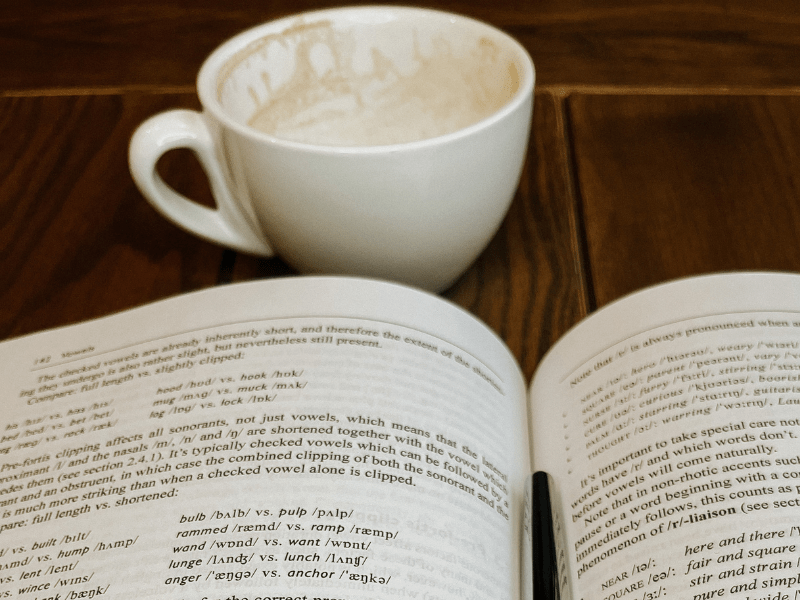
Dyslexia is a learning disorder that involves difficulty reading due to problems identifying speech sounds and learning how they relate to letters and words—also called reading disability. Dyslexia is the result of individual differences in areas of the brain that process language.
Researchers have found that dyslexia has nothing to do with problems with intelligence, hearing, or vision. Most children and adults with dyslexia can succeed in school with tutoring or a specialized educational program. Emotional support also plays an important role.
The main signs of dyslexia
Well, there are many main signs to detect dyslexia. For example, reading quickly, pronouncing words correctly, mastering letters, decoding or reading the word, increasing vocabulary and learning new words, receiving information and elaborating meaning, understanding and short-term memorization, expression and comprehension, spelling, writing, associating the sound with the corresponding letter, executive functions, planning, organizing tasks, such as tidying up, tidying up the room, completing school assignments and homework, and others.
Dyslexia affects a person’s ability to learn and master a new language
Dyslexic language learners may have difficulty hearing new sounds, connecting those sounds to letters, pronouncing words, and memorizing new vocabulary. They may also have more difficulty in reading and writing activities.
Types of dyslexia:
There are 15 types of dyslexia: phonological dyslexia, visual dyslexia, attentional dyslexia, surface dyslexia, linguistic dyslexia, perceptual dyslexia, numerical dyslexia, directional dyslexia, primary dyslexia, secondary dyslexia, developmental dyslexia, acquired dyslexia, deep dyslexia, neglect dyslexia, and letter position dyslexia.
Phonological dyslexia
People who have phonological dyslexia have problems pronouncing words and manipulating the sounds of language and this leads to difficulties in reading. Also, they have trouble decoding words and breaking them down into sounds.
Visual dyslexia
The brains of people with visual dyslexia cannot complete pictures or correctly process words that are written and seen. Additionally, there are problems with arranging words and letters in the correct sequence or order.
Attentional Dyslexia
“Attentional dyslexia is a reading deficit. Letters migrate between neighboring words. However, readers correctly identify and keep their relative position within the word. For example, people with attentional dyslexia may read “fig tree” as “fig-free” or even “tie free”. [It was copied from the research study Developmental attentional dyslexia]
Surface dyslexia
For this type of dyslexia, the main sign is that people have no problem decoding words into sounds but have trouble performing the next step. They have no problem pronouncing or saying words that are familiar to them. They have trouble doing this when it comes to unknown or irregular words.
The main problem is in the letter-sound association that produces superficial dyslexia. The more letters deviate from their normal, ordinary, regular sound in a given word, the more difficult it becomes for surface dyslexia.
Linguistic dyslexia
The main feature is errors when reading. There are no difficulties with letters, words, and sounds, but there are difficulties with sentences and paragraphs. Students omit and substitute words in a sequence that typically occurs.
Perceptual dyslexia
People with perceptual dyslexia have trouble recognizing words. They do not have problems associated with phonological or surface dyslexia and letter-sound association.
Numerical dyslexia
Those who suffer from numerical dyslexia have problems with the concept of time, order, and sequencing. They are always late, confused, and do things in the wrong order.
Directional Dyslexia
It is distinguished by left-right confusion and a tendency to become disoriented or lost. Researchers occasionally use this term to mean confusion with letters such as p and b or d and b, where there is confusion over the “direction” of the letter. Generally, problems with directions are a symptom of dyslexia more than a sub-type. Not all people with dyslexia have this problem.
Primary dyslexia
Primary dyslexia is also known as developmental dyslexia. It is a specific learning disorder, the main characteristics are difficulties with reading, spelling, and decoding written words. In addition, it is considered a neurological condition that affects the brain’s ability to process written language, despite normal intelligence, and even adequate education.
People with primary dyslexia typically experience trouble in accurate and fluent word recognition, especially with decoding unfamiliar words and spelling.
This type of dyslexia is very common and it is a genetic one. If a kid has a parent with dyslexia, there is a big chance that a kid will have dyslexia or another learning disorder.
Furthermore, it is important to note that primary dyslexia is separate from acquired dyslexia, which occurs due to brain injury or other neurological conditions.
Secondary dyslexia
Secondary dyslexia is caused by brain developmental issues (at early stages of life) or issues during childbirth.
The following abnormalities indicate a secondary performance disorder:
- Hypomotor activity
- Hypermotor skills
- Disturbances in class
- Clowning
- Fear of school
- Aggressiveness
- Avoidance behavior
Developmental dyslexia
Did you know that developmental dyslexia was considered a hereditary visual disability until the 1950s?
It commonly is referred to as dyslexia. Developmental dyslexia affects people’s ability to read, write, spell, and sometimes speak. It is a specific and persistent difficulty with language skills that can cause difficulties with phonological processing, decoding, and fluent reading.
People with dyslexia often show the following characteristics:
- difficulty with reading and spelling,
- poor phonological awareness,
- visual processing issues,
- slow reading speed and comprehension,
- difficulty with writing and organization.
Acquired dyslexia
Acquired dyslexia prevents the activation of phonological representations and word image representations with particular damage, in contrast, children with developmental dyslexia face a problem in processing the phonological representations of words.
It usually occurs later in life as a result of brain injury or damage to the language areas of the brain. Unlike developmental dyslexia acquired dyslexia’s main characteristics are decline in reading ability following a period of normal reading skills.
There are two main types of acquired dyslexia: phonological dyslexia and surface dyslexia.
Phonological dyslexia refers to difficulties in reading words that involve phonological processing, such as decoding unfamiliar words or pseudo-words.
Surface dyslexia, on the other hand, involves difficulties in reading irregular or unpredictable words that do not follow regular phonetic patterns.
The exact causes of acquired dyslexia can vary and may include strokes, head injuries, brain tumors, or degenerative diseases such as Alzheimer’s or Parkinson’s disease. Treatment for acquired dyslexia typically involves rehabilitation focused on improving reading skills and compensatory strategies to help individuals with reading difficulties.
Deep dyslexia
Deep dyslexia is a rare form of acquired dyslexia. The main characteristics are profound reading impairments and the presence of semantic errors. People with deep dyslexia often have difficulty reading both words and nonwords, and they may exhibit visual errors, such as substitution, omission, or addition of letters or whole words.
One of the key features of deep dyslexia is the occurrence of semantic errors, where individuals substitute words with others that are related in meaning. For example, they may read the word “boat” as “ship” or “car.” This suggests that semantic information is reliant during reading, rather than the usual phonological route used by typical readers.
In addition, people with deep dyslexia tend to have difficulty with word comprehension and may struggle to process abstract or less concrete words. They may experience challenges identifying the grammatical class of words and understanding the syntactic structure of sentences.
The exact cause of deep dyslexia is unknown, but it is believed to result from damage or disruption to language-processing areas in the brain, such as the left hemisphere or the temporoparietal region.
It is important to note that deep dyslexia is a relatively uncommon form of dyslexia, and most individuals with dyslexia do not have this particular subtype.
Neglect dyslexia
Neglect dyslexia, also known as neglect alexia or unilateral neglect dyslexia, is a neurological condition characterized by the inability to attend to or perceive written material on one side of the visual field. It is typically associated with individuals who have suffered damage to the right hemisphere of the brain, particularly the parietal lobe.
People with neglect dyslexia often exhibit significant difficulty in processing or recognizing words, letters, or sentences on the neglected side of their visual field. This can result in omitting or skipping words on that side, or even reading in a zigzag pattern as they only attend to the non-neglected side.
Neglect dyslexia is not a language-related impairment, as affected individuals can still comprehend and produce language without difficulty. It is specific to visual processing and attention deficits. The severity of neglect of dyslexia can vary. Some people experience more distinct symptoms than others.
Treatment typically involves rehabilitation strategies along with compensatory techniques to help individuals improve their visual attention and scanning abilities. Occupational therapy, visual training exercises, and the use of aids such as prism glasses or letter-by-letter reading techniques may be utilized to help individuals overcome the challenges associated with neglect dyslexia.
Letter position dyslexia
Letter position dyslexia is a specific type of dyslexia where individuals struggle with perceiving the correct order of letters within a word. This can lead to errors in reading and writing, as they may mix up the sequence of letters or perceive them in a different order than they are supposed to be. For example, someone with letter position dyslexia might read the word “was” as “saw” or write the word “quiet” as “quite”. This difficulty in accurately perceiving letter order can make reading and writing more challenging for individuals with this type of dyslexia.
Is it related to dysgraphia?
I would like to mention that there is a type of dysgraphia called dyslexic dysgraphia.
The main characteristics are that the naturally written text is not clear enough to be read, or it is copied and is reasonably good but with poor spelling. The brain damage stem is probably absent. However, those people have a normal finger-tapping speed. Students can have dysgraphic dyslexia and not have “pure” dyslexia.
Conclusion
I do believe that all teachers must be aware of the different types of dyslexia.
Moreover, I have a blog post with exercises that you can use if you teach people with dyslexia. The exercises are not only for kids but also for adult learners.
Used sources:
AH, N. (2023, October 12). Types of dyslexia & how to identify them: Neurohealth AH. neurohealth arlington heights. https://neurohealthah.com/blog/types-of-dyslexia/
Frequently asked questions. International Dyslexia Association. (2021, July 26). https://dyslexiaida.org/frequently-asked-questions-2/
Friedmann, N., Kerbel, N., & Shvimer, L. (n.d.). Developmental attentional dyslexia. Cortex; a journal devoted to the study of the nervous system and behavior. https://pubmed.ncbi.nlm.nih.gov/20832785/
Jokisch, S. (2023, January 26). Legasthenie symptome Anzeichen – Besser Erkennen Lernen. sabinejokischlernstraat.com. https://www.sabinejokischlernstraat.com/legasthenie-symptome-anzeichen/
Khentov-Kraus, L., & Friedmann , N. (2018, June 9). Vowel letter dyslexia . Cognitive neuropsychology. https://pubmed.ncbi.nlm.nih.gov/29888628/
Plessis, S. du. (2023, October 20). What are the 12 types of dyslexia? – edublox online tutor. Edublox Online Tutor | Development, Reading, Writing, and Math Solutions. https://www.edubloxtutor.com/dyslexia-types/
Types of dyslexia. Dyslexia Reading Well. (n.d.). https://www.dyslexia-reading-well.com/types-of-dyslexia.html


 EN
EN  ES
ES  DE
DE  UK
UK
Leave a Reply